You’re trying to calculate the cost of your upcoming bathroom renovation. But how do you know how much tile to buy for the floor? What about the kitchen backsplash? How do you even go about measuring this?
This post will decode how to calculate the square footage for your tiles. It will cover:
- basic square footage calculation
- how to measure for tile walls
- how to measure the flooring
- What to round up to
- How much extra tile to buy
I think you’ll find this to be simpler than what it seems. So, read on to learn how to measure for tile and add enough extra on.
If you are looking to measure a shower or bathtub walls for tile then you want to also check out this post.
How to Calculate Square Feet for Tile
First, let’s start with a basic square footage calculation. Which is this:
Length x Width= Area (square feet)
Pretty simple, right? This applies to squares and rectangles.
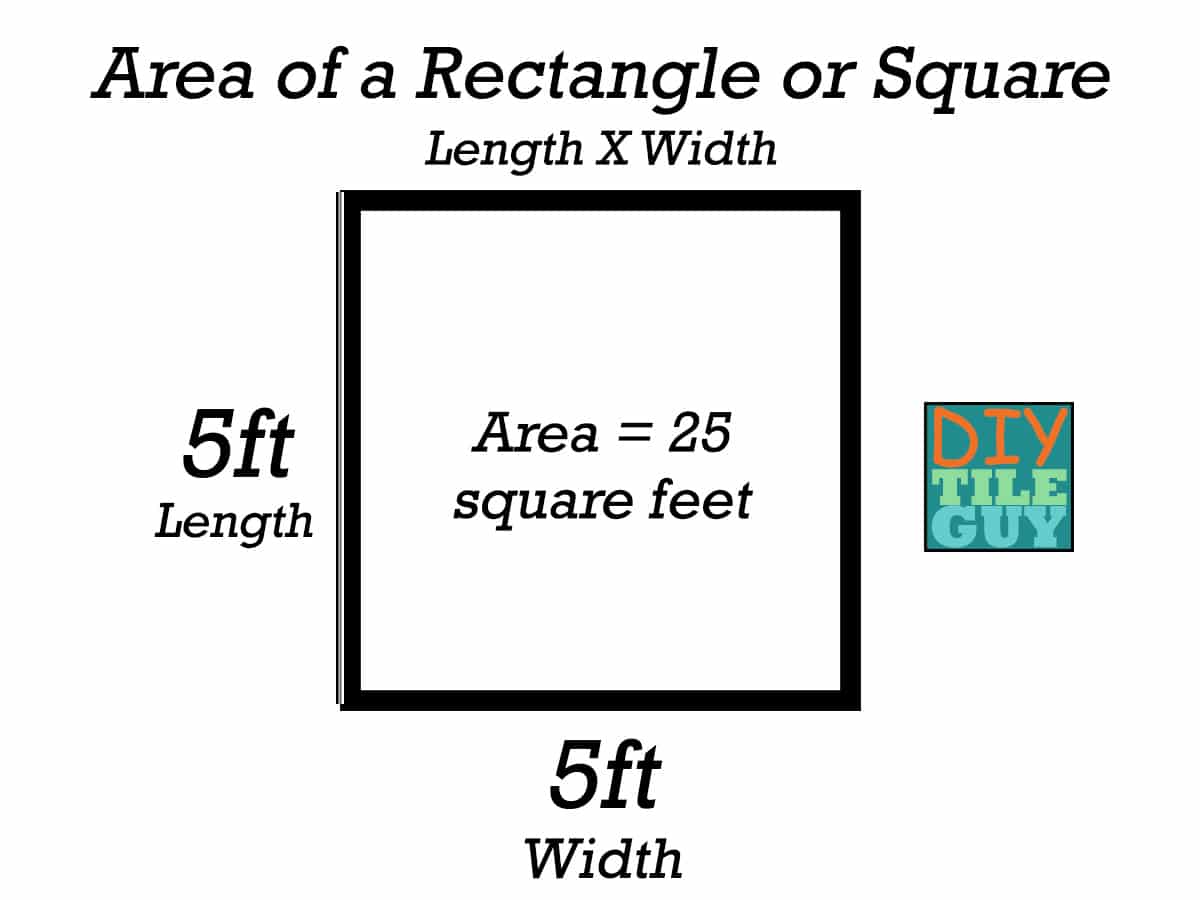
So, the area of this square is: 5ft x 5ft = 25 square feet
For walls, you calculate:
Width x Height
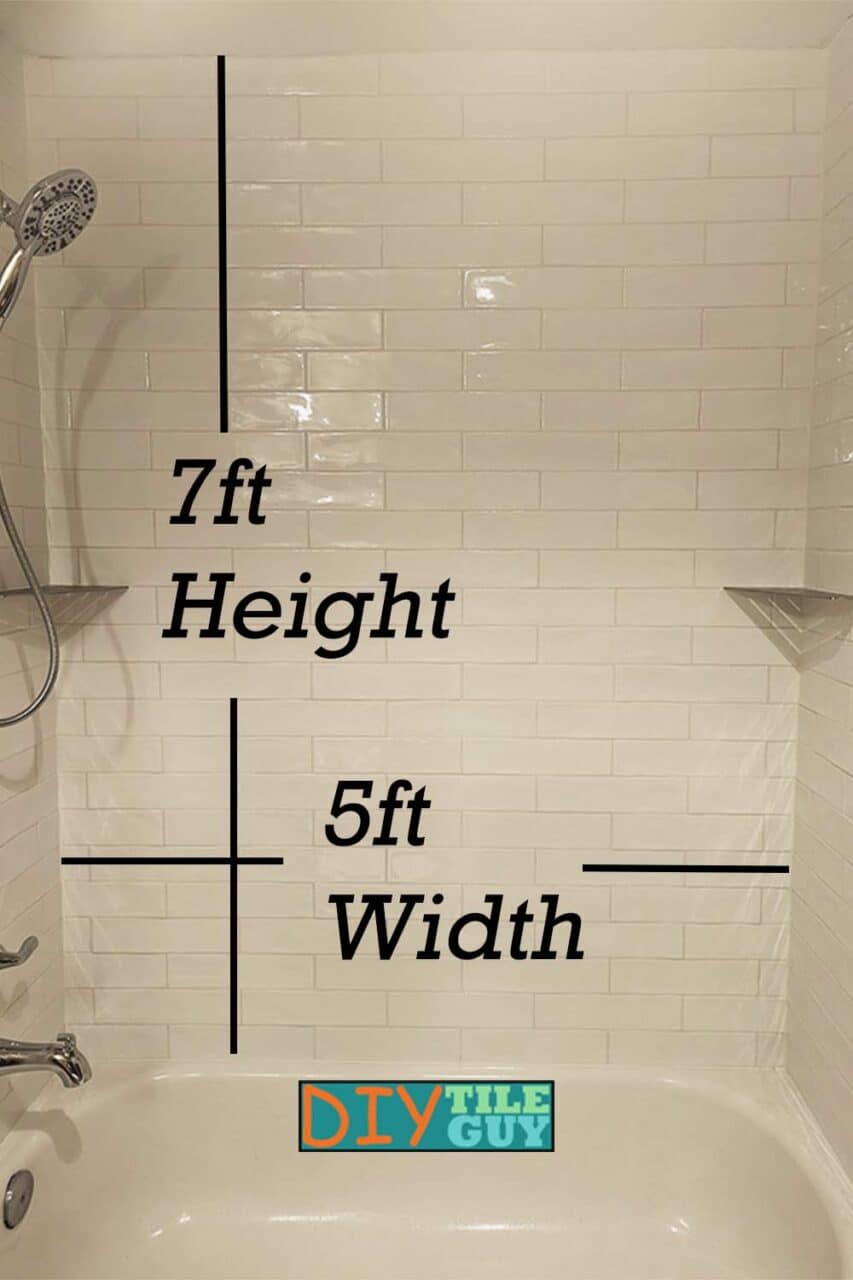
This bathtub wall would be 5ft wide x 7 ft tall which equals 35 sq. ft.
Now that we have the basics let’s move on to how to measure for tile using specific applications.
How to Measure for Tile Square Footage
Firstly, most tile walls and floors don’t work out to be exactly on the foot marks. Because of this, we’ll round up all of our measurements.
Round up to nearest foot or half-foot
When measuring a wall or floor, you want to round your numbers up to the nearest foot or half-foot. For example,
- 4ft 11 inches would round up to 5ft
- 5ft 2 inches would round up to 5ft 6 inches
- 6ft even would round up to 6ft 6 inches
Remember, that 6 inches is one-half of a foot.
Why round up?
The reason for rounding up is because you will be cutting the tiles.
For example, if you are tiling 20 inches tall and you are using 12 inch tall tiles then you will cut off the extra 4-inches. Maybe you can use that 4 inch piece but maybe you can’t.
My point is that it takes two tiles to go 20 inches high and that’s why you round 20 inches up to 24.
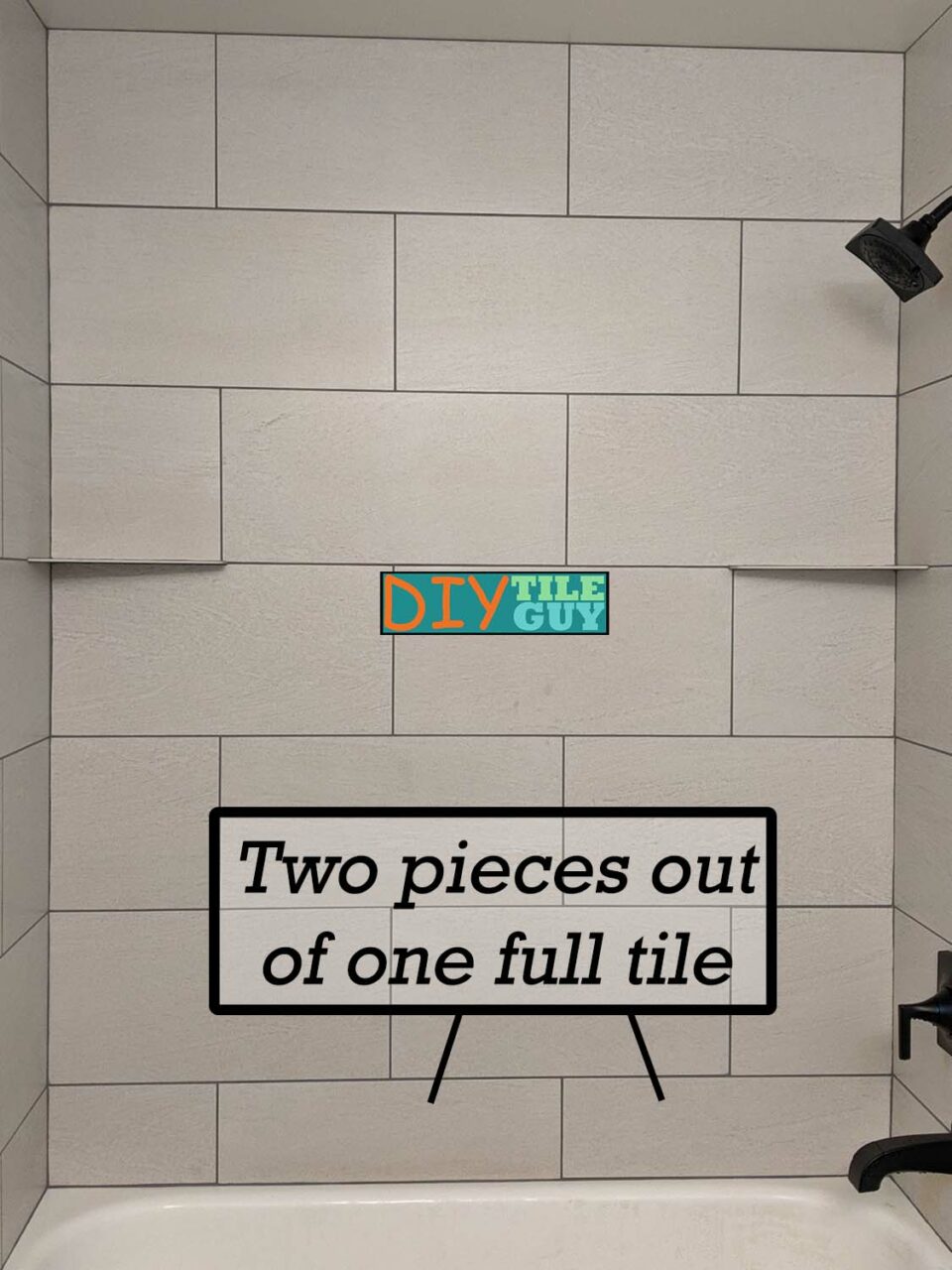
Getting 2 pieces out of 1 tile
The reason for rounding up to the half-foot mark is that anything under 1/2 tile means that you can get two pieces out of that one tile.
Example: You are tiling 76 inches tall with 12-inch tall tiles. You will use 6 tiles (72 inches) and one tile can provide 2 of the 4-inch pieces.
But I’m not using 12-inch tall tiles!
That’s OK. Tile is ordered in square footage quantities so rounding up to foot/half-foot still works for most tile sizes.
However, there are a few scenarios where I measure by the square inch. I went into more detail on measuring by the square inch in my measuring shower walls for tile post.
How to Measure for Tile Bathroom Walls
When measuring bathroom walls you need to find the width and height of every wall that will be tiled.
So, take out a tape measure and measure how many feet and inches the wall is wide and write it down.
Then measure how high the tile will go on the wall and write it down.
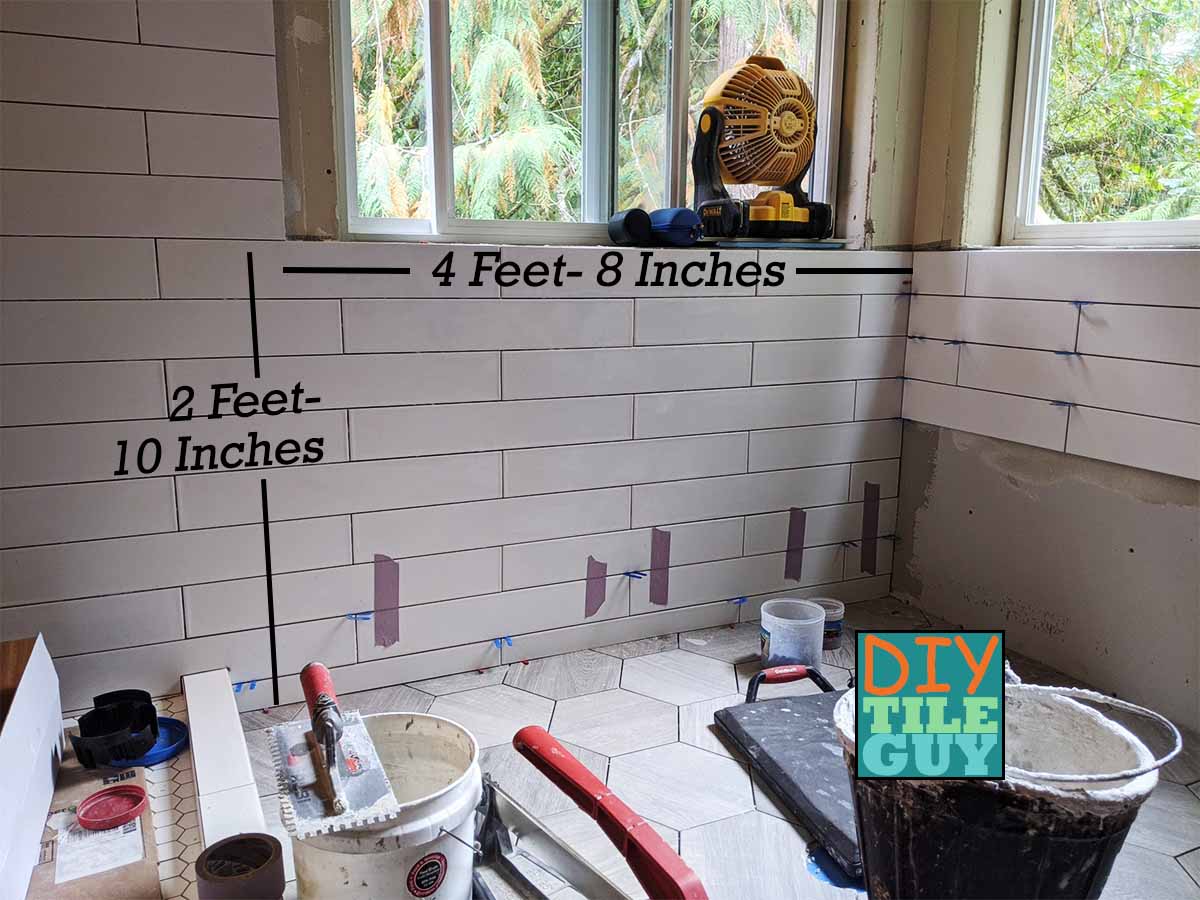
With the tile wainscot above, the height of the tile portion of the wall is 2 feet-10 inches (34 inches). Further, the length of the wainscot portion of the wall is 4ft-8 inches (56) inches.
We will round both numbers up and come to: 3ft x 5 ft.
This totals: 15 square feet of tile.
So, 15 sq. ft is the actual number of tiles you will need to complete this project. But it’s a good idea to have a few extras.
Read on for how to figure out how many extra tiles to buy so you will have enough to complete your tiling project.
How to Calculate Square Footage for Flooring
Calculating square feet for floors is quite similar to calculating the amount of tiles for walls.
Whereas walls are width x height, floors are width x length.
Let’s use a common bathroom floor as an example.
5×8 bath (measure rectangle)
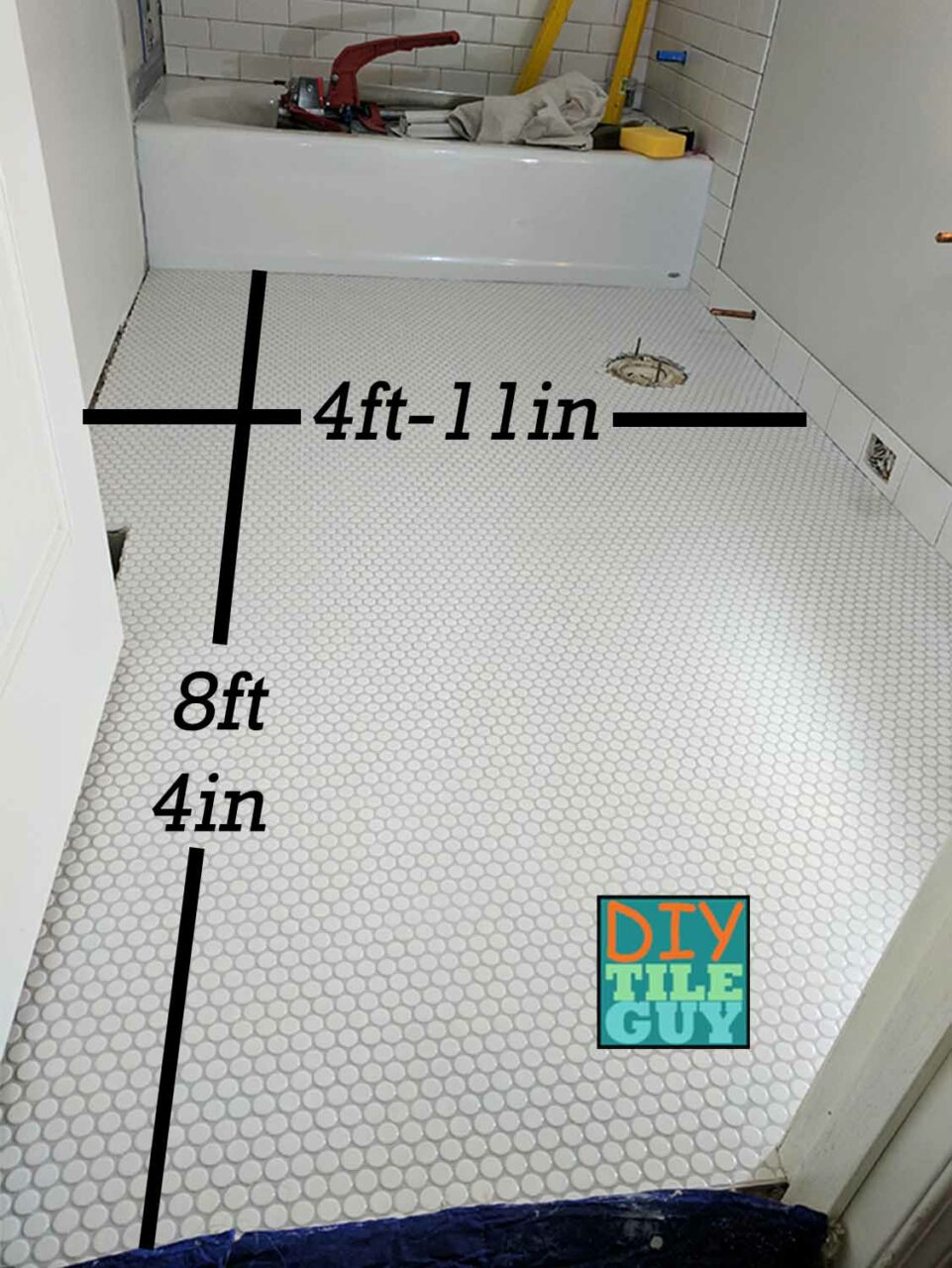
Here we have a common bathroom floor size. From the door to the bathtub measures 8ft-4 inches in length. The width is 59 inches.
8ft-4in rounds up to 8ft-6 inches or 8.5 ft. Further, 59 inches (4ft-11in) rounds up to 5ft.
8.5×5 = 42.5 sq feet of floor tiles necessary to cover the floor.
Make sure to measure underneath the door
One thing to keep in mind is that the tile generally starts part-way underneath the door. So, rather than measure from the bathtub to the door when the door is closed you want to measure about 3/4 inch underneath the doorway.
So, if your measurement was 64 inches from bathtub to door you would want to add an additional 3/4 inch onto this measurement to make sure that your tile extends all of the way underneath the door when it’s closed.
How to subtract the vanity from the total area of the floor
Oftentimes, the vanity will already be installed by the time floor tile installation begins. So, we don’t need to include the vanity in our square footage totals.
There are two ways to measure a bathroom floor and not include the vanity.
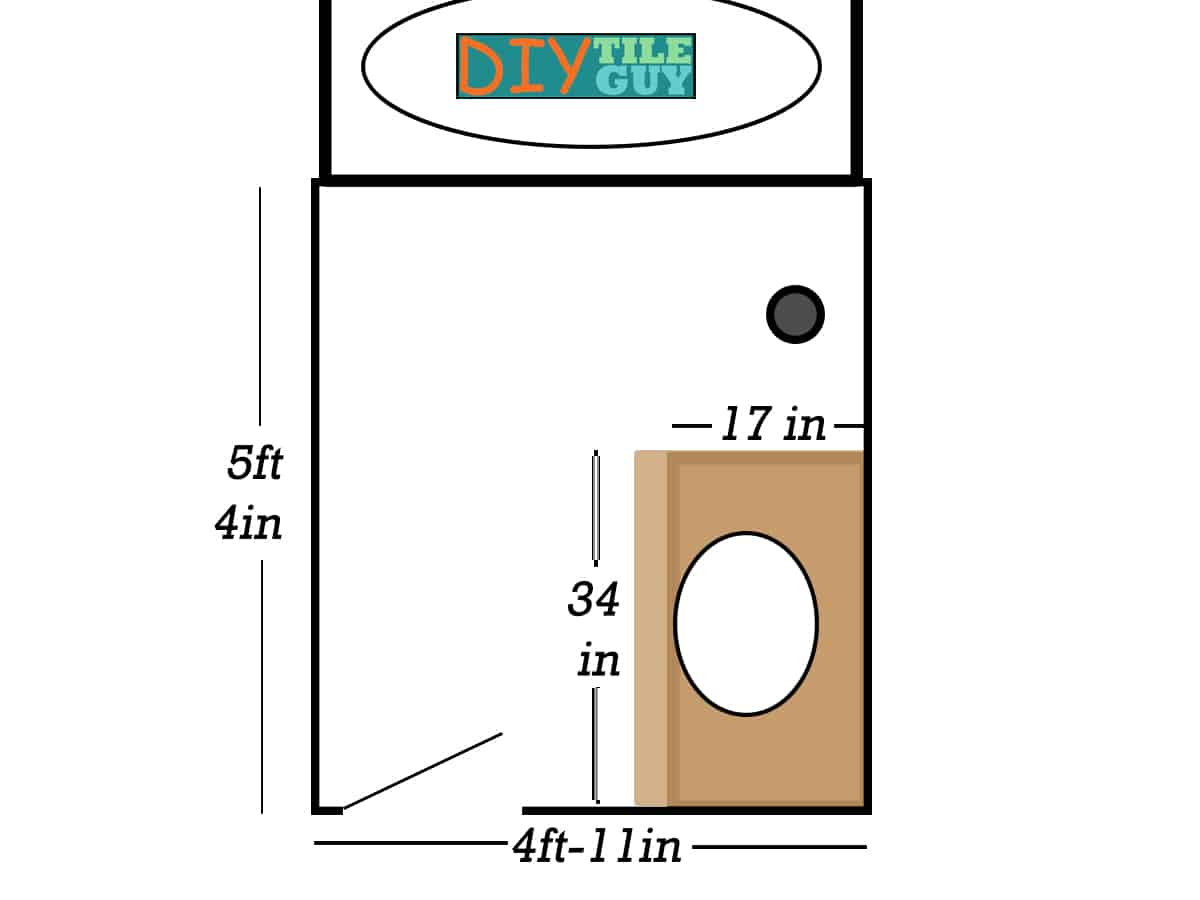
Method 1: Measure your room then subtract the vanity
The first way is to simply subtract the vanity from the total square footage of the space.
First, the dimensions of the floor round up to 5.5 x 5 feet. This totals 27.5 square feet for the total size of the room.
Secondly, we need the right measurement for the vanity. Take a tape measure and measure the bottom toe kick area for length and width. Your measurements might be:
17 inches x 34 inches.
However, instead of rounding the measurements up, I’ll be rounding them down since we’re subtracting them from the total.
In this case, I would round the 17-inch measurement down to 12 inches, or 1 foot. then 34 inches would round down to 30 inches, or 2.5 ft.
Then we get the square footage of the vanity: 1 x 2.5 = 2.5 sq. ft.
This would be subtracted from the 27.5 sq. feet of total space and bring down the room’s square footage to 25 sq. ft. plus extra.
Method 2: Divide space into smaller sections
Another way to measure the space would be to chop up the room into smaller sections. In this case, we could turn the room into two different rectangles.
Rectangle 1 is 2.5 feet x 4 ft. 11 inches. We would convert this by rounding 30 inches up to the nearest half foot which is 3ft and the other direction would be rounded up to 5 ft.
So the area of rectangle 1 = 15 sq. ft.
Rectangle 2 is 3ft-6in x 2 ft-10in. The first number gets rounded up to 4ft and the second becomes 3ft.
The area of rectangle 2 = 12 sq. ft.
Then we add the rectangles together and come up with: 27 sq. ft.
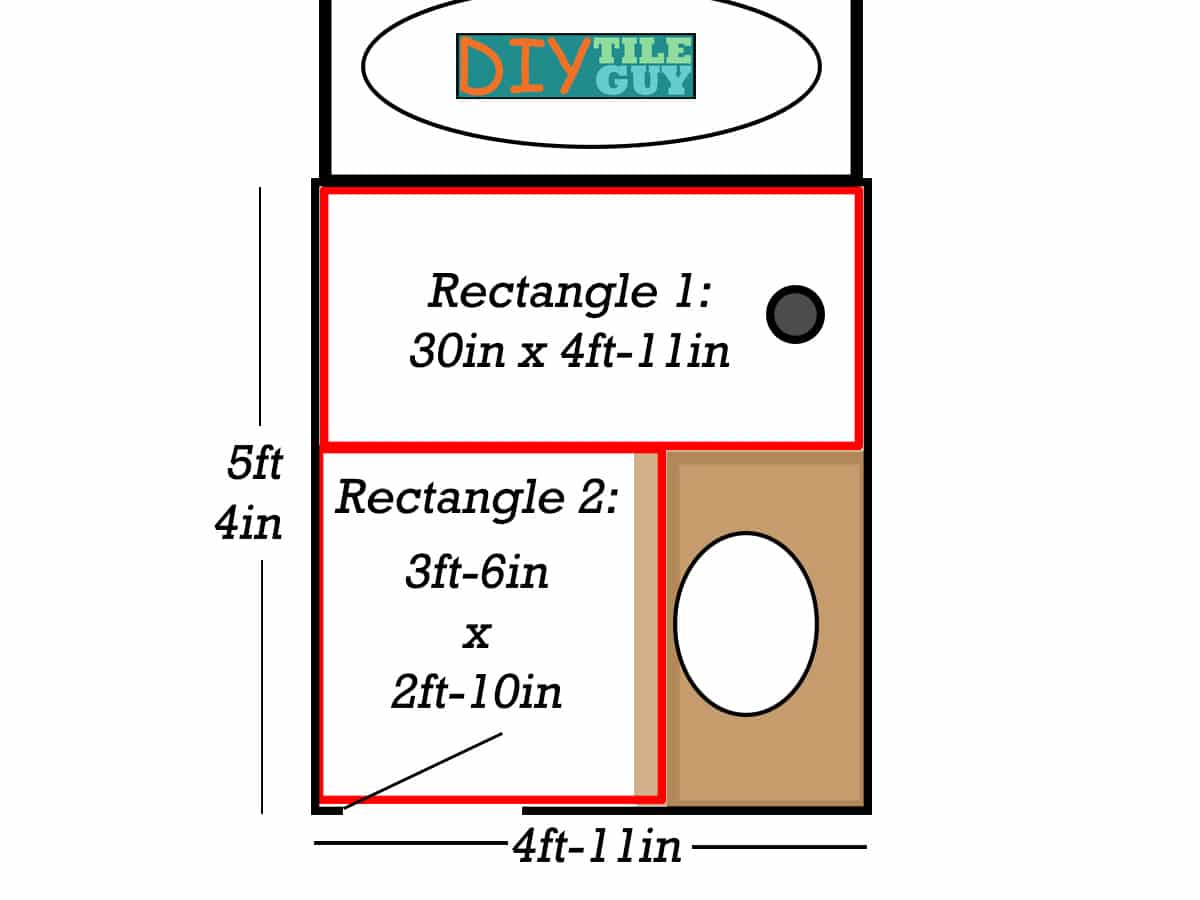
In these examples, we do come up with two different totals: 27 feet and 25 feet. However, they are very close and goes to show why this isn’t an exact science and stresses the need to purchase extra tile to make sure that you will have enough to complete your tile project.
How Much Extra Tile to Buy?
How much extra tile to buy seems like a simple question but there are several different answers. So, I guess… it depends?
What it depends on are several factors:
- How confident you are in your measurements
- How easy more tile is to get
- Where the tile is being purchased from
- Tile size
- Tile layout/pattern
For example, there is more waste with a herringbone pattern than a typical straight-lay pattern.
Why do I need to order extra tiles?
There is more than one reason why you may need a few extra tiles beyond the absolute minimum amount to cover your space.
- You may miscut one or more tiles
- Certain tiles may have some sort of coloring or pattern that you don’t like
- You may receive some damaged tiles and not realize it until 80% of your floor is tiled
- You want a few extra on hand in case an unforeseen future repair is needed
- Maybe you miscalculated your space
It’s common practice to have some extra tiles on hand. The question is how many more tiles do you need?
When you buy tile from a box store
Firstly, I have written an entire post on how to buy tile from big box retail stores. Stores like Home Depot, Lowes, Menards, Floor and Decor, etc.
When it comes to purchasing extra tiles, box stores are a great place to purchase from. The reason being is that as long as you can return your extra tiles for a full refund you can’t really order too many.
That being said, it’s not all fun & games when ordering from the retail box stores as the linked post above suggests.
Bottom line when ordering tile from box stores: Order A LOT extra because you can return all of the ones you don’t want for a full refund.
Ordering tile from a tile showroom or dealer
The way that most tile is purchased, I think, is through a local showroom that carries several different makes and models of tile.
Typically, the policy in this scenario is that they don’t accept tile returns or, if they do, they charge an exorbitant fee for ‘restocking’. Commonly, this runs 30-50%.
Bottom line when ordering from tile showrooms: Assume whatever you order that you will be stuck with. So, order a few extras but don’t get crazy. It’s pretty common to shoot for 10-15% extra.
How much extra tile to buy when special order/handmade
Finally, if you are ordering tile that is special order or handmade then you will want to have more than a normal amount of overage figured in.
The reason is that you absolutely can’t be short on tile.
So, if your tile order takes 2+ months to come in, it’s coming from overseas, or it’s a batch made especially for you and impossible to match later, you have to suck it up and order a lot extra.
Who is doing the measuring of the tiles?
Finally, it matters who’s measurements that you are using for your order.
A tile or industry professional
As a pro that does this all of the time, I will order 5-7% extra for tile that I know can’t be returned. This works for me and I trust my measurements. But it’s too tight for most.
If you are not a tile professional but have followed the steps in here then you should be able to aim for 10-15% extra if you’ve measured carefully. If it’s a special order, then I recommend aiming for 25-35% or more.
If you are ordering from box stores, then buy 20-50% too much as long as you can return the extra.
Store your extra tiles
At the end of your project, you want to have a few extra tiles on hand just in case. Find a secure place to store them. Hopefully, you won’t need them but I’ve seen entire rooms torn out before that could have been prevented if the homeowners had a couple of extra tile onhand.
Final Thoughts
This post covered the basics of how to calculate square footage for tile. See this post if you are measuring a shower or bathtub surround for tile.

Leave a Reply